SFC
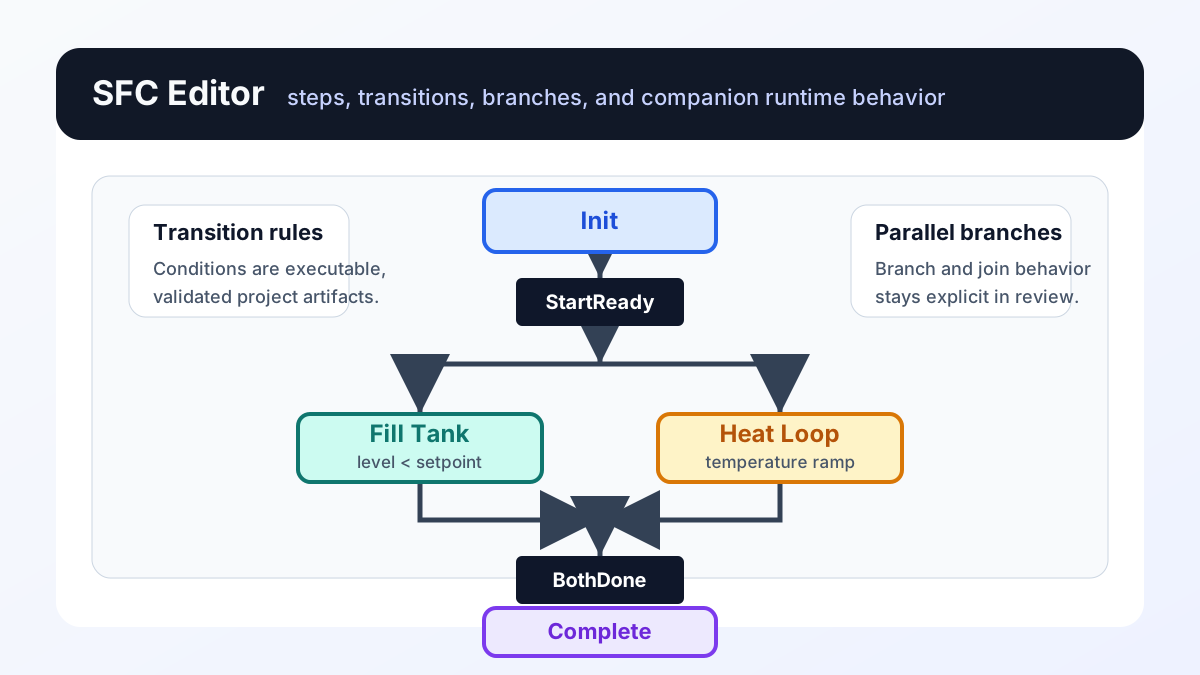
Figure: An SFC sequence with an Init step, a StartReady transition,
parallel Fill Tank and Heat Loop branches, a BothDone join, and a
Complete step. The graph is reviewed as an open project artifact and then
validated through the same runtime loop.
What it gives you
- step/transition visual authoring
- explicit phases and branching
- a shared ST/runtime toolchain instead of a separate execution engine
Five-step quickstart
- Open
examples/sfc/sfc_simple_parallel.sfc. - Let truST open the SFC editor automatically.
- Inspect the initial step, transition conditions, and any parallel branches.
- Save and inspect the resulting companion ST/runtime behavior.
- Validate the project and run it through the normal runtime loop.
Best for
- procedural phase control
- sequences with clear step ownership
- flows that need explicit parallel branches or joins
When not to use SFC
- when the logic is closer to rung-based circuit behavior
- when the system is better described as event-driven states
- when a simple ST sequence is easier to maintain than a graph
Common mistakes
- treating transitions as vague comments instead of executable conditions
- overusing SFC for logic that has no real sequencing
- editing the companion ST directly and expecting the graph to remain source-of-truth
Example folder
examples/sfc